A hometown tragedy and the need for Grace
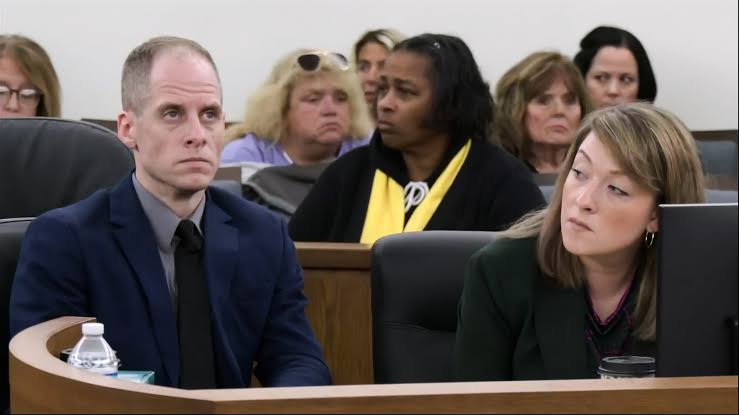
On September 29, 2026, Caleb Flynn, a former worship pastor and American Idol contestant, was convicted of murdering his wife, Ashley, a teacher, volleyball coach, and mother of two. Ashley was shot in their Tipp City, Ohio, home in February. Prosecutors presented evidence that Caleb, who was having an affair with a fellow worship leader, staged a burglary to conceal the killing.
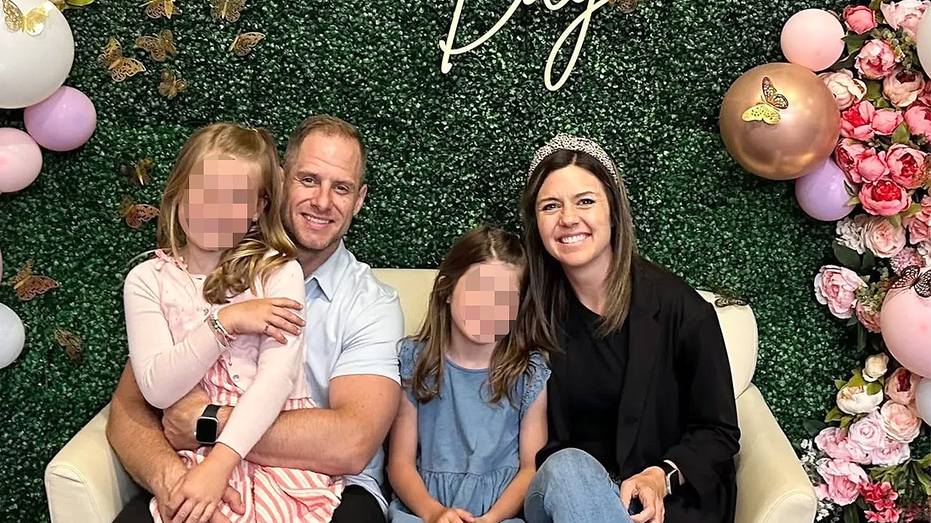
This story is sad and disorienting. It’s sad because of the destroyed dreams, the broken promises and the glaring betrayal executed under the highly produced protection of midwest evangelical Christianity. It’s disorienting because this is my small hometown.
In high school, I preached a sermon to the Christian Life Center youth group where multiple friends attended. Driving by the CLC is a staple of landing in the Dayton airport. Ashley Flynn lived and was murdered right next to my high school. She was the 4th grade teacher and volleyball coach to friend’s kids. She was friends with several folks in my family.

But it’s more than that. It’s disorienting because the villains here are relatable as they are repulsive. On the surface, Caleb Flynn is wildly different than me. I have no real musical talent and am much less rooted and known in my local hometown. Still, we are both middle aged fit guys from the same culture and faith. We are husbands, fathers and connected to the same small part of the world that is the Christian community of north Dayton Ohio. We easily could have been friends.
My theology tells me that I’m morally no better (nor worse) than Caleb Flynn.1 Any goodness in me is a gift. That said, a friend told me, “But Tim, you didn’t have an affair and kill your wife.” He is right. Faithfulness and betrayal are not morally equivalent. Any goodness in my life doesn’t make me the source of that goodness. God’s grace does more than forgive sin; it renews the heart, strengthens obedience and teaches us to love what is good. The good works we do are real, but they remain a gift. We Christians are responsible for our choices, yet dependent on Him for the strength to choose rightly.2
One of the Bible’s greatest heroes was a man after God’s own heart. God gave King David the courage and strength to slay the giant who oppressed an entire nation. And yet, “he saw a woman bathing, and the woman was very beautiful to look at” (2 Samuel 11:2). That beautiful sight led him to send for her start an illicit affair. When she became pregnant, he tried to conceal what he had done and finally arranged the death of her husband, Uriah, a loyal and honorable man. Thousands of years apart, same pattern of brokenness and pain.
Arrogance, pride, lust, power, even novelty, universally tempt all of us, even when CS Lewis already excellently summed up how sin destroys joy in the banter between two demons who describe sin as: “An ever increasing craving for an ever diminishing pleasure is the formula.”3
When we know where a path leads, why can its start still look so attractive? I find something uncomfortable in my own response to this story and the way media elevates the emotional parts of romance over commitment and duty. Alongside the disgust and sadness, I recognize the appeal of being intensely wanted, of novelty, of a secret that makes ordinary life feel suddenly electric.
Our brains are wired to imagine the thrill while escaping the cost, as though the pleasure could be separated from the people we would betray. Knowing that a desire is destructive does not necessarily make us stop wanting it. In some sense, we are even drawn towards destruction. We need grace not only to govern our actions, but to correctly order and change what we love.
But, here the consequences are right in front of us. Despite the hollywood appeal of an illicit love story, Ashley’s death confronts us with a person betrayed and a family shattered. What looks like romance when we leave out those who suffer becomes truly evil when we bring them back into view.
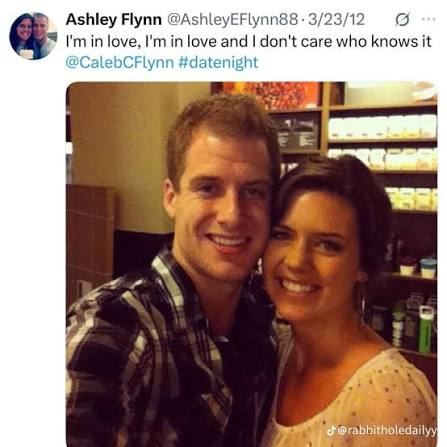
Ashley Flynn was a woman whose profile picture consistently included her husband. Ashley knew her marriage was struggling, but she was fighting for it. In a note saved on her phone, she wrote, “We really need Jesus to intervene.”4 Later, her goals included getting on the same page with Caleb. Meanwhile, Caleb was sending his mistress messages saying he hated Ashley and wanted her dead. Her family had welcomed him into their lives and trusted him with a place in their business.
Here is a man with enumerable blessings. Nothing is more precious (and rare) in our modern world than having roots and meaning. Nothing is more sought after than to be the guy that other men want to be and who comes home to a loving family. His place in the community and christian affiliations led to success in his job selling furniture and flooring to churches. He had a beautiful wife and daughters, who by everything I can read, trusted and loved him. He had a wife fighting for their marriage until she was shot twice in the head.
What, if anything, does great blessing have to do with great sin? Ashley Flynn could still be dead from an unlucky bum who couldn’t carry a tune. We have this phrase “special place in hell” for sin that gets wrapped in special packaging, but I just can’t rev up the engine of injustice and anger for this situation. The destruction is raw in front of us as we watch this ghoul of a once alive man sit in the middle of a room while the system orchestrates the deserved destruction of his life.
The defendant is simultaneously both present and absent in that courtroom. Absent because he can’t live with us in the present. He is shuffled in and out while we build things and hug those we love. He sits alone with his thoughts in a cell while we focus on our hurting back or annoying driver that just isn’t getting out of our way. He appears to be only living in the regretful past and in a terrible future, helpless to do anything to change his situation.
My faith tells me that there is always hope of redemption. King David experienced incredible loss and met it with true repentance and eventually restoration. That clearly isn’t possible without confession of some sort, so this man seems stuck, locked out of the present.
What is a good man to feel about all this? Extreme sadness for the loss? Gratefulness for the embrace of my own family? Comfort in the good reward of my better choices? Glad to watch the wheels of justice turn? All the above?
I want justice, but I find no satisfaction in the ruin before me. Mostly, I feel sadness and fear: sadness for all that has been lost, and fear at what someone from my own community — and I myself — could be capable of. And I resonate with all of those questions, but I don’t know how to hold them together except by running into my Father’s arms and thanking him for sparing me and the people I love a road like this. That leaves me in love with His goodness and thankful for every breath. At some point, thankfulness merges into worship.
And that’s an odd place to end up: worship . . . the very job of this once-among-us man named Caleb Flynn. A man who once with his mistress skillfully and earnestly5 led a crowd of worshiping Christians. The picture tells us a truth: hands lifted up, the crowd was looking past that the two of them to a risen Savior who is still good and who knows what this all means. Here very fallen people have dishonored God’s name, but they (and we) cannot diminish His goodness or glory.
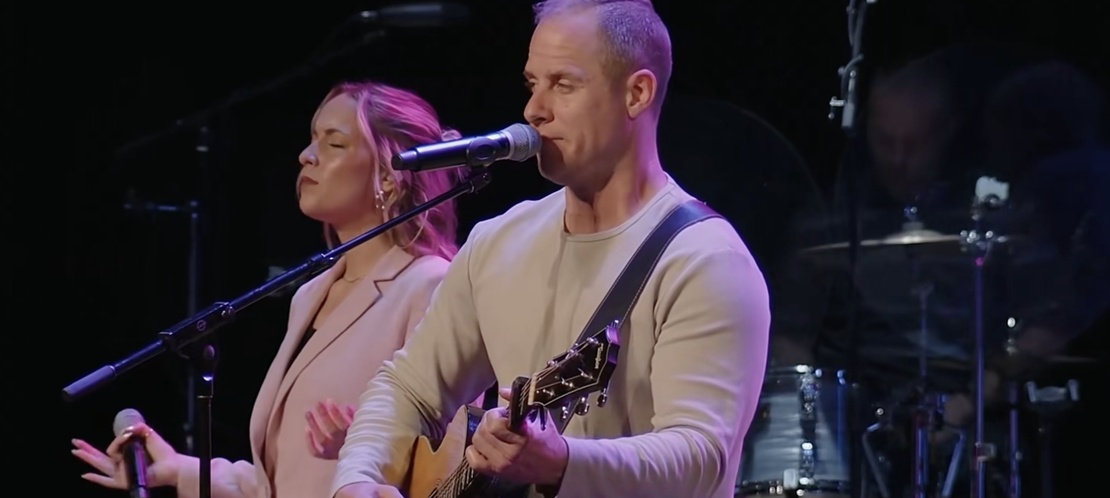
Caleb Flynn has destroyed his marriage, his own life and deeply wounded his family and his community. God remains good. I remain thankful. Come Lord Jesus.
- By “no better,” I mean that we share the same fallen nature and that I have no goodness independent of God’s grace (Romans 3:9–12; 1 Corinthians 4:7). This does not mean equal guilt: Reformed theology recognizes that some sins are more grievous than others (Westminster Confession 6.2–4, 16.3; Larger Catechism 150) ↩︎
- This expresses the Reformed doctrine of sanctification by grace: God produces genuine goodness in us, so obedience matters, but gives us no grounds for boasting. Westminster Confession 13.1 and 16.2–3 teaches that grace renews us and empowers good works without removing our duty to obey. Canons of Dort III/IV.15–16 similarly describes undeserved grace that heals the will and produces willing obedience. ↩︎
- C. S. Lewis, The Screwtape Letters, Letter IX (9) ↩︎
- The line comes from a note recovered from Ashley Flynn’s phone and shown in court during her husband Caleb Flynn’s murder trial in Miami County, Ohio.
Court reporters covering the Sept. 28, 2026 testimony quoted it directly. Angenette Levy of Law&Crime / Court TV posted this note from Ashley’s phone: “now I would say our marriage is struggling. Zero intimacy, respect, fondness, appreciation, nothing. We really need Jesus to intervene.” ↩︎ - This may need an explanation. Luther’s simul iustus et peccator means “at once righteous and a sinner”: believers are justified through Christ while still struggling with sin. I believe his earnestness could have coexisted with grave sin; sincerity does not establish saving faith or excuse the refusal to repent. ↩︎
Jeff Kharoufeh
October 4, 2026 at 5:59 pm
Well stated, Tim. Our only hope is Christ. But for the grace we have received through him, we are all capable of heinous sin. I pray for the children and Ashley’s family as they grieve and mourn.
Lee Beckham
October 4, 2026 at 7:38 pm
Very interesting post. Thanks for sharing your thoughts! Good question on what to feel. . . I think what stands out most to me is the overwhelming tragedy of it all. “Foolish” also comes to mind – in the biblical sense (“the fool has said in his heart, “there is no God”). His foolish choices led to this disastrous, horrific, devastating outcome.