
Posts tagged:

Christian Life

A hometown tragedy and the need for Grace

On September 29, 2026, Caleb Flynn, a former worship pastor and American Idol contestant, was convicted of murdering his wife, Ashley, a teacher, volleyball coach, and mother of two. Ashley was shot in their Tipp City, Ohio, home in February. Prosecutors presented evidence that Caleb, who was having an affair with a fellow worship leader, staged a burglary to conceal the killing.

Recent Family Picture at Church

This story is sad and disorienting. It’s sad because of the destroyed dreams, the broken promises and the glaring betrayal executed under the highly produced protection of midwest evangelical Christianity. It’s disorienting because this is my small hometown.

In high school, I preached a sermon to the Christian Life Center youth group where multiple friends attended. Driving by the CLC is a staple of landing in the Dayton airport. Ashley Flynn lived and was murdered right next to my high school. She was the 4th grade teacher and volleyball coach to friend’s kids. She was friends with several folks in my family.

Christian Life Center Exterior

But it’s more than that. It’s disorienting because the villains here are relatable as they are repulsive. On the surface, Caleb Flynn is wildly different than me. I have no real musical talent and am much less rooted and known in my local hometown. Still, we are both middle aged fit guys from the same culture and faith. We are husbands, fathers and connected to the same small part of the world that is the Christian community of north Dayton Ohio. We easily could have been friends.

My theology tells me that I’m morally no better (nor worse) than Caleb Flynn.1 Any goodness in me is a gift. That said, a friend told me, “But Tim, you didn’t have an affair and kill your wife.” He is right. Faithfulness and betrayal are not morally equivalent. Any goodness in my life doesn’t make me the source of that goodness. God’s grace does more than forgive sin; it renews the heart, strengthens obedience and teaches us to love what is good. The good works we do are real, but they remain a gift. We Christians are responsible for our choices, yet dependent on Him for the strength to choose rightly.2

One of the Bible’s greatest heroes was a man after God’s own heart. God gave King David the courage and strength to slay the giant who oppressed an entire nation. And yet, “he saw a woman bathing, and the woman was very beautiful to look at” (2 Samuel 11:2). That beautiful sight led him to send for her start an illicit affair. When she became pregnant, he tried to conceal what he had done and finally arranged the death of her husband, Uriah, a loyal and honorable man. Thousands of years apart, same pattern of brokenness and pain.

Arrogance, pride, lust, power, even novelty, universally tempt all of us, even when CS Lewis already excellently summed up how sin destroys joy in the banter between two demons who describe sin as: “An ever increasing craving for an ever diminishing pleasure is the formula.”3

When we know where a path leads, why can its start still look so attractive? I find something uncomfortable in my own response to this story and the way media elevates the emotional parts of romance over commitment and duty. Alongside the disgust and sadness, I recognize the appeal of being intensely wanted, of novelty, of a secret that makes ordinary life feel suddenly electric.

Our brains are wired to imagine the thrill while escaping the cost, as though the pleasure could be separated from the people we would betray. Knowing that a desire is destructive does not necessarily make us stop wanting it. In some sense, we are even drawn towards destruction. We need grace not only to govern our actions, but to correctly order and change what we love.

But, here the consequences are right in front of us. Despite the hollywood appeal of an illicit love story, Ashley’s death confronts us with a person betrayed and a family shattered. What looks like romance when we leave out those who suffer becomes truly evil when we bring them back into view.
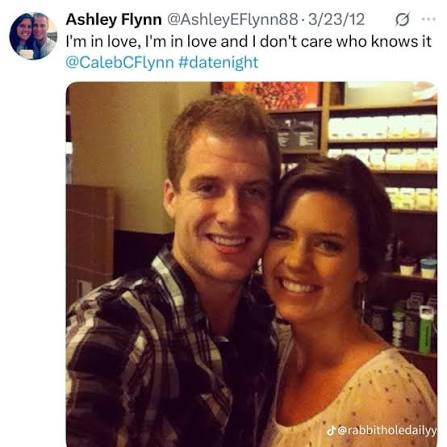
The start of the journey

Ashley Flynn was a woman whose profile picture consistently included her husband. Ashley knew her marriage was struggling, but she was fighting for it. In a note saved on her phone, she wrote, “We really need Jesus to intervene.”4 Later, her goals included getting on the same page with Caleb. Meanwhile, Caleb was sending his mistress messages saying he hated Ashley and wanted her dead. Her family had welcomed him into their lives and trusted him with a place in their business.

Here is a man with enumerable blessings. Nothing is more precious (and rare) in our modern world than having roots and meaning. Nothing is more sought after than to be the guy that other men want to be and who comes home to a loving family. His place in the community and christian affiliations led to success in his job selling furniture and flooring to churches. He had a beautiful wife and daughters, who by everything I can read, trusted and loved him. He had a wife fighting for their marriage until she was shot twice in the head.

What, if anything, does great blessing have to do with great sin? Ashley Flynn could still be dead from an unlucky bum who couldn’t carry a tune. We have this phrase “special place in hell” for sin that gets wrapped in special packaging, but I just can’t rev up the engine of injustice and anger for this situation. The destruction is raw in front of us as we watch this ghoul of a once alive man sit in the middle of a room while the system orchestrates the deserved destruction of his life.

Caleb Flynn in Trial

The defendant is simultaneously both present and absent in that courtroom. Absent because he can’t live with us in the present. He is shuffled in and out while we build things and hug those we love. He sits alone with his thoughts in a cell while we focus on our hurting back or annoying driver that just isn’t getting out of our way. He appears to be only living in the regretful past and in a terrible future, helpless to do anything to change his situation.

My faith tells me that there is always hope of redemption. King David experienced incredible loss and met it with true repentance and eventually restoration. That clearly isn’t possible without confession of some sort, so this man seems stuck, locked out of the present.

What is a good man to feel about all this? Extreme sadness for the loss? Gratefulness for the embrace of my own family? Comfort in the good reward of my better choices? Glad to watch the wheels of justice turn? All the above?

I want justice, but I find no satisfaction in the ruin before me. Mostly, I feel sadness and fear: sadness for all that has been lost, and fear at what someone from my own community — and I myself — could be capable of. And I resonate with all of those questions, but I don’t know how to hold them together except by running into my Father’s arms and thanking him for sparing me and the people I love a road like this. That leaves me in love with His goodness and thankful for every breath. At some point, thankfulness merges into worship.

And that’s an odd place to end up: worship . . . the very job of this once-among-us man named Caleb Flynn. A man who once with his mistress skillfully and earnestly5 led a crowd of worshiping Christians. The picture tells us a truth: hands lifted up, the crowd was looking past that the two of them to a risen Savior who is still good and who knows what this all means. Here very fallen people have dishonored God’s name, but they (and we) cannot diminish His goodness or glory.

Flynn and Botner Lead worship together

Caleb Flynn has destroyed his marriage, his own life and deeply wounded his family and his community. God remains good. I remain thankful. Come Lord Jesus.

  1. By “no better,” I mean that we share the same fallen nature and that I have no goodness independent of God’s grace (Romans 3:9–12; 1 Corinthians 4:7). This does not mean equal guilt: Reformed theology recognizes that some sins are more grievous than others (Westminster Confession 6.2–4, 16.3; Larger Catechism 150) ↩︎
  2. This expresses the Reformed doctrine of sanctification by grace: God produces genuine goodness in us, so obedience matters, but gives us no grounds for boasting. Westminster Confession 13.1 and 16.2–3 teaches that grace renews us and empowers good works without removing our duty to obey. Canons of Dort III/IV.15–16 similarly describes undeserved grace that heals the will and produces willing obedience. ↩︎
  3. C. S. Lewis, The Screwtape Letters, Letter IX (9) ↩︎
  4. The line comes from a note recovered from Ashley Flynn’s phone and shown in court during her husband Caleb Flynn’s murder trial in Miami County, Ohio.
    Court reporters covering the Sept. 28, 2026 testimony quoted it directly. Angenette Levy of Law&Crime / Court TV posted this note from Ashley’s phone: “now I would say our marriage is struggling. Zero intimacy, respect, fondness, appreciation, nothing. We really need Jesus to intervene.” ↩︎
  5. This may need an explanation. Luther’s simul iustus et peccator means “at once righteous and a sinner”: believers are justified through Christ while still struggling with sin. I believe his earnestness could have coexisted with grave sin; sincerity does not establish saving faith or excuse the refusal to repent. ↩︎
By 2 Comments

Work vs Relaxation or Why Captain Call is the Villain

Embracing hard things is important. We lift up those among us who work harder, endure more and suffer to get stronger or make the world better. But how much suck should we embrace? When is ok to relax or is choosing to relax opening the door to cowardice and weakness?

Pretty much not Relaxing

Yesterday when I was playing with my 11 year old daughter having a carefree time horsing around and I had a pang of guilt: should I be doing something harder? Of course not. It’s common wisdom that it’s good to horse around with kids and to have fun, with no specific agenda or goal. It’s necessary to be present in the moment and to enjoy oneself apart from achieving any goal. But! While it’s ok, would it be better to be push for something better? That time with my daughter, wouldn’t it be better to aim for some lesson? What if I were trying to make it more fun for her instead of just enjoying myself? The fact is that we can always do something better and can always elevate our impact — delivering more purpose, meaning and, ultimately, the potential for more joy.

The call to a life of unlimited effort is alive and well today. At MIT, all-nighters, an insane course load and failing health due to work were a badge of honor. I remember my first week, when an upper classman on crew bragged to me that she just finished a two-hour team workout that started at 5am after pulling her second consecutive all-nighter. My first thought was not sympathy, but if I had what it takes in this new environment.

It doesn’t get any easier. The professional life is a road race that puts you in constant competition. Also, you start to get a feel for the cost of your time as the demands for your money go up. A single hour of fun could alternatively provide enough money to do something significant for people you love. When I started consulting, this became much more stressful. I could turn an hour of rest into money. When you know the value of your time and can directly convert hours to dollars, it presents a real challenge. Naval Ravikant (investor, entrepreneur) writes:

“Say you value your time at $100 an hour. If you decide to spend an hour driving across town to get something, you’re effectively throwing away $100. Are you going to do that? . . . I would make a theatrical show out of throwing something in the trash or giving it to Salvation Army, rather than returning it or trying to fix it.”

Naval Ravikant

Now he famously valued his time at the start of his career at $5,000 an hour. That is a good trick to focus your priorities, but watching a sunset fall at the cost of 5K is a non-trivial decision if you think about all the good you can do with that kind of money.

The good news is that at some level, we have to sleep, relax and kick back or we die. Since we must relax, there has to be a point when is it ok, watch a movie in flight, or just sit and watch the trees blow — without it being a chance to “reflect on strategy”? Under what conditions is it ok to take a nap or waste time? Do we relax, just so we can run faster later, or do we run fast so we can relax? Put more broadly, what principles govern the balance of work and play? To what degree can we actually enjoy things without feeling guilty that we aren’t doing something harder. It’s clear to me that all meaningful things are hard, but are all hard things more meaningful than their alternative?

I’ve thought about this a lot and one of my first conclusions is to focus on what the right thing is, evaluate your current actions, and do the right thing. Always be honest, kind, just and humble. If it’s hard, do it. If it’s easy, enjoy it. This provides a lot of clarity. When riding a bike, you work hard on the up-hills and enjoy the glide on the downhills. In both cases you are completely focused and acting to reach your destination. There should be zero guilt on a pain free and enjoyable glide down hill. In that case, your optimal strategy is to enjoy the moment.

So that may be pretty easy, but what about when you pause the race, when you step away from fastest way to get somewhere? Stopping the race to enjoy the scenery will definitely cost you, but also give you something. It’s selfish to stop, breathe fresh air and be solely present in the moment, but it’s also necessary.

Yet another Optimizer hard at work

I’ve always loved how CS Lewis gets at this in the Screwtape letters. Joy is a fundamental human need and it maps closely to meaning and joy requires being present in the physical moment. He writes that the demon must prevent the “patient” from enjoying the present:

“It is far better to make them live in the Future…it is unknown to them, so that making them think about it we make them think of unrealities… it is the most completely temporal part of time- for the Past is frozen and no longer flows, and the Present is all lit up with eternal rays” 

CS Lewis, The Screwtape Letters

Operations Research provides an opportunity to understand how to separate the goal from the enablers. Every set of equations has an objective function: the ultimate goal, and a set of constraints that bound the ability to get the optimal answer. To understand how to balance work and relaxation, you have to answer the question of what gives life meaning. There can be many constraints on that objective function: the need to sleep, make money, stay in shape, eat food. But it’s key to keep the constraints separate from the objective. There is no benefit in dying with a six-pack or even of dying with a lot of trophies. Effort, the suck, doing hard things are all about the doing the constraints well– in order to optimize something else. What is that?

The staid reformers of the Heidelberg Catechism asked: What is the chief end of man? Answer: To glorify God, and fully to enjoy Him forever. The cause and effect are so clearly bound together: act and receive. Glorifying God is work, but it’s also a joy to the believer. Enjoying God is pure rest, and is also joy. Work and rest. Suffer and enjoy. It would be so easy to stop at the first clause, but that would deny the purpose of our creation–we were created, not just to worship, but to enjoy that act. With an objective like this, the “hard things” are embraced as a means to an end. The “soft things” are there to be fully accepted, enjoyed and shared.

Worship as a chief end is not just for the Christians. “Some people worship beauty, some worship political identities, and others worship their children,” wrote Derek Thompson in the Atlantic. “But everybody worships something. And workism is among the most potent of the new religions competing for congregants.” Could work itself be a valid great objective and life-purpose?

But we can dig into this more under the lens of Christianity. While the goal of life is open-ended for the non-believer, the believer is instructed to worship and obey as revealed through an honest and consistent reading of scripture. The apostle Paul emphasized his work and suffering in his descriptions of beatings, imprisonments, riots, sleepless nights, and hunger (2 Corinthians 6:5). He makes it clear that life in a fallen world is not easy, and the Christian life is described as more difficult, even challenged by demonic forces. In Genesis, physical labor is cursed with friction and obstacles at every turn. And yet Christians are called to rise and face these challenges. Paul’s hardships are shown as a means for the faithful to encounter resistance and endure, not give up.

Paul, Living His Best Life Now

Christians should be the freest people on the planet to work hard because their doctrine liberates them to pour their energy, time and skill and creativity into blessing others. This is principle leading to behavior. It is a good rule to work hard, but to avoid self worth, or even identity based on that work. Conversely, rest is just another activity, and does not confer identity. Work and rest have purpose, when they seek to optimize worship and make room for joy. (I originally had about 8 more paragraphs on the Christian view of work, but pulled that out into a separate post.)

A counterpoint to Christian view is much older, the first philosophers widely considered that enjoyment itself was a valuable pursuit. Ancient Greek philosophers such as Democritus, Aristippus, and Epicurus embraced the hedonistic theory that a good life involved pleasure and you had a moral duty to make good use of your pleasures. You have a short life so you had better do what you can to enjoy living it. Aristotle thought that work made you worse because people who are too busy working don’t have the time to perform their civic duty or develop sophisticated morals. Other philosophers such as Søren Kierkegaard and Michel Foucault believe that pleasure is essential in developing selfhood. Foucault thought that embracing pleasure was a form of expressing and developing personal freedom. Kierkegaard adopted Hegel’s view that in enjoyment the individual develops an awareness of themself as the particular individual they are.

Making pleasure a goal doesn’t sit well with me. I’ve always been skeptical of the pursuit of happiness. The pursuit of something with broader meaning seems so much more important. Jordan Peterson resonates with me when he writes:

It’s all very well to think the meaning of life is happiness, but what happens when you’re unhappy? Happiness is a great side effect. When it comes, accept it gratefully. But it’s fleeting and unpredictable. It’s not something to aim at – because it’s not an aim. And if happiness is the purpose of life, what happens when you’re unhappy? Then you’re a failure. And perhaps a suicidal failure. Happiness is like cotton candy. It’s just not going to do the job.

Jordan Peterson

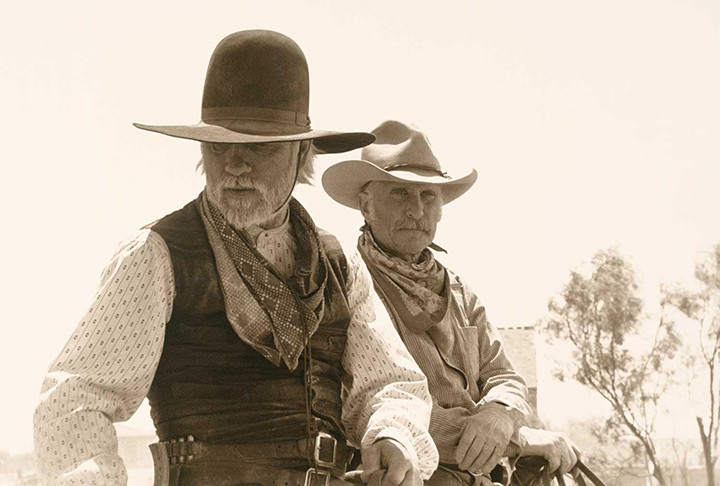
However, this post is the result from a recent perspective from a much less holy book I read recently: Lonesome Dove a 1985 Western novel by Larry McMurtry. It’s a story of two different protagonists: one who lives life to enjoy it, Gus McCrae, in another one who lives life to work, Captain Call. Both of them are superheroes of the James Bourne type: put them in front of a pack of bandits or wild Indians and each of them are going to emerge victorious. Gus, however, is loud, talkative and willing to take in the pleasures of life. Capt Call works from sun up until dark and steadily leads a motley bunch of cowboys and former bandits. In the end, however, he is ultimately a coward, using work to hide his pain. His son doesn’t know who his father is, and Capt Call is too afraid or ashamed to tell him. Even worse, his absence of vulnerability prevents him from experiencing joy and developing friendships.

Two Heros?

Several scenes show his power. When his son is threatened by a solider who wants to take a horse, Capt Call easily beats the solider senseless. He endures all manner of hardship to honor a promise and take his friend’s body back to Texas. The natural opinion is to see Gus and Capt Call as a powerful pair who match each other’s weaknesses. The two of them together form the power of their team and their friendship appears to be the bond that keeps the group together.

After more thought, I’m convicted that Capt Call is the villain of the whole story. He has all the appearances of strength, but when it matters he is a coward, unwilling to be happy and willing to embrace the full potential of life. Gus, by contrast, exhibits a deplorable set of values. He treats woman as objects, is an open racist, lacks empathy and is prone towards physical violence. He leaves broken lives in his wake and, worst of all, is oblivious to the pain he causes from his selfish pursuit of pleasure. Some of this is excused by his era and the hard nature of his life. And there is no doubting that he is a clear hero–willing to risk his life to help and save others. He also has an endearing sense of humor. What truly makes him great is his embrace of life. He is willing to work, but he doesn’t serve work. Work is a constraint, not an objective in itself and none of this diminishes his strength.

So what life do you want to live: One more like Gus or one like Capt Call? I want to have hard, fulfilling work, that is seasoned with much joy. I want to have the courage to do the hard things that need doing, but to also have the wisdom to put effort in it’s proper place. I’m very deliberate and intentional about the roles I have: worshiper, husband, father, worker, citizen. I want to do all those things with honor. Really doing those right, especially the first three, requires a copious amount of joy and grace. My children are best served by remembering a dad who was quick to laugh, serve and wait for them, than a dad who was always after optimizing his personal output, growth and accomplishment. Relationships are formed in trust and shared joys and the roles I list are successful only in the context of deeply effective relationships.

All this said, what do I do? First, keep the goal separate from the constraints. The most critical thing for me is to be clear on the goal. I divide the goals into roles. As a living being (health goals), worshiper (spiritual goals), husband, father, worker, and citizen. I picture the life I want to have and the contributions I want to make. I write these down and review them during my daily journaling. Well set goals, shared with your community, provide peace. You can either rest or adjust your goals. They force you to prioritize and decide. The goals you agree not to do are just as important as the goals you decide to pursue. And this is a very iterative process for me. I’m constantly adjusting and learning what I can and can’t do as well as what I should and shouldn’t be doing. Time audits/journaling and sharing your goals with others provide the ideal feedback mechanism.

The constraints are just as meaningful as the goals as they become your personal set of rules. I love this WSJ article from 2015. In that article, Jennifer Wallace writes that “personal policies”

Personal policies are an established set of simple rules that guide your decisions and actions. On the surface, they offer a gentler way of saying no, as in: “I don’t take work calls on Saturdays because that’s my time with family.” On a deeper level, they encourage reflection, help to define priorities and aid decision-making, especially with in-the-moment requests. They can stop you from defaulting to that regretful “yes.”

A Policy of Saying ‘No’ Can Save You Time and Guilt by Jennifer Breheny Wallace

These are also connected to what James Clear writes about identity based habits and Ray Dalio in principles. Rules like: “I don’t swear”, “I go to bed at 10pm” or “I exercise every day” become the type of constraints that form what you get done in life. They should all be tied to specific goals. They make the decisions that lead toward successful completion of goals easy. Just like goals, they require a system that evaluates them. I also have found that community is key. Your spouse or close friends will be a great sounding board for rules that just don’t make sense for you. I’ve found that even the process of sharing them culls a lot of stupid rules. In any case, being intentional here is key. You have to write down your rules. I also tie them to the role they support and the associated goal for that role. I end up with rules like this:

  • In order to be a good husband, I will be sure to call my wife every day, no matter where I’m traveling.
  • Since my chief end is worship, I start every day with a prayer, followed by reflection and journaling.
  • As a Christian, I go to church every Sunday and participate actively in the congregation.
  • As an athlete, I exercise every day.
  • etc.

So, please, enjoy the downhill rides, and the hard slogs uphill. Also, enjoy the stops on the side of the road, especially if you are sharing the ride, because you know where you are going and when you need to get there. Hug your companion. Joke, laugh and watch the sunset. In the morning, run hard, work hard and don’t be afraid to sweat. All these are the constraints. Define your objective, and keep that in mind. Never waver from doing the hard things that need doing. But! Most important, never place effort, work and grit as the objective itself. That’s a bad drug that gives the appearance of meaning, but the meaning get’s trapped and self-consumed without joy to make it fully flower.

If you make work itself the goal, you need look no farther to the austere and empty end that met Capt Call.

Hard Work that is Going Somewhere
By 4 Comments