Engineering & Code

Engineering & Code explores the full stack of modern tech—from bits and transistors to cloud fleets and formal proofs. Here you’ll find clear, rigorous walk-throughs of software design, embedded hardware, security architecture, and the physics that underpins them, always paired with code, schematics, and reasoning you can put to work.

Laser Alignment

I’m going dive into the theory of laser alignment, show the math and the jigs I built to put that math into practice. This post is for someone who wants the “why” behind a lot of the online material on laser cutters. If you just want some practical tips on how to better align your […] read more

“Room Temperature” Superconductor?

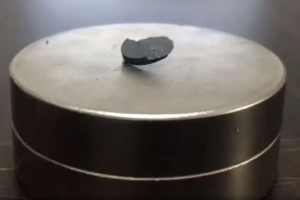
Note: these results are still new and will need to be replicated and further studied by the scientific community. This whole thing may be nonsense, but I did some thinking on the impact if it’s true. Researchers from Korea University have synthesized a superconductor that works at ambient pressure and mild oven-like temperatures (like 260 […] read more

All those wireless Mice! (from Taiwan)

If you are like us, you get too many mice and keyboards lying around. With 5 or six devices, and an equal number of receivers you can just plug stuff in to find what matches. That assumes the peripherals are working and haven’t been lost. Can we interrogate the usb receivers and discover their associated […] read more

Shapeoko Troubles

I recently encountered an issue when generating a grid of holes for workbench. I had recently planed down an old workbench from our house in New Jersey. I was planning on 20 mm holes spaced in a grid with 96mm spacing to match the festool MFT table. I’m hoping to use the available array of […] read more

DIY Calibration tools

I had purchased Fowler 52-520-109-0 Dial Indicator with 1″ Travel with +/-0.5% measurement accuracy. I wanted to measure the alignment of my table saw blade and fence. You can buy tools that do this using the miter slot track with a dial gauge included for about $70. For example, this one: This had fairly limited […] read more

Math of the Kreg 720

The Pocket-Hole Jig 720 uses Kreg Automaxx™ to enable one-motion clamping by simultaneously clamping your workpiece and automatically adjusting to the exact thickness of your material (from 1/2″ to 1 1/2″). GripMaxx™ anti-slip holds the project piece secure. The manual doesn’t address how to pick the right screw length or how to set the stop […] read more

Autoscoring with Matlab

While I qualified a long time ago on the M9, I never really learned to be a good shot. Now, I’m trying to learn to shoot well and wanted to automatically score my targets, keep the data, and get better. There are apps to do this, but none of them did what I wanted. One […] read more

Torsion Table for Shapeoko

I needed a torsion table to make sure my Shapeoko XXL had a solid foundation. Dimensions for the Shapeoko are available here. The basic idea of a torsion table is to use two thin layers of material on either side of a lightweight core, usually a grid of beams. Torsion boxes are used in wings […] read more

Kerf Mounted Corner Brackets

Kerf Mount Corner Brackets are great. But it takes some thinking if you are working with larger lumber. I recently purchased these and these from amazon. The corner bracket looks like this: The trick is figuring out where to cut the leg at 45 degrees and the kerfs, especially if the leg isn’t square. I […] read more

Nginx With Https for Local Development

Testing HTTPs locally is always hard, but I’m against testing on production or even on a remote server. Things are also complicated by developing in linux as a subsystem on windows via WSL2. I was able to use mkcert to get ssl to work locally. While I would love to use Let’s Encrypt locally, Let’s […] read more